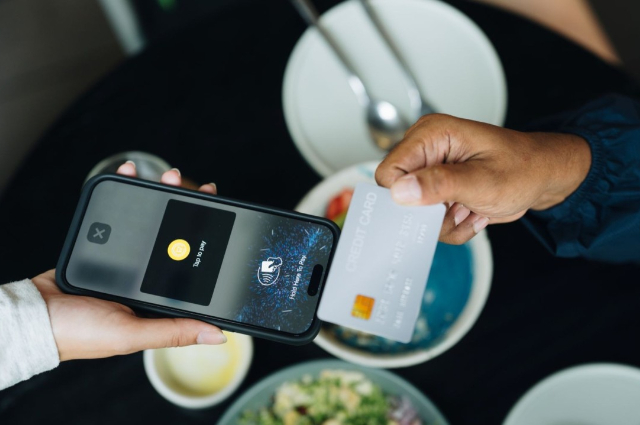
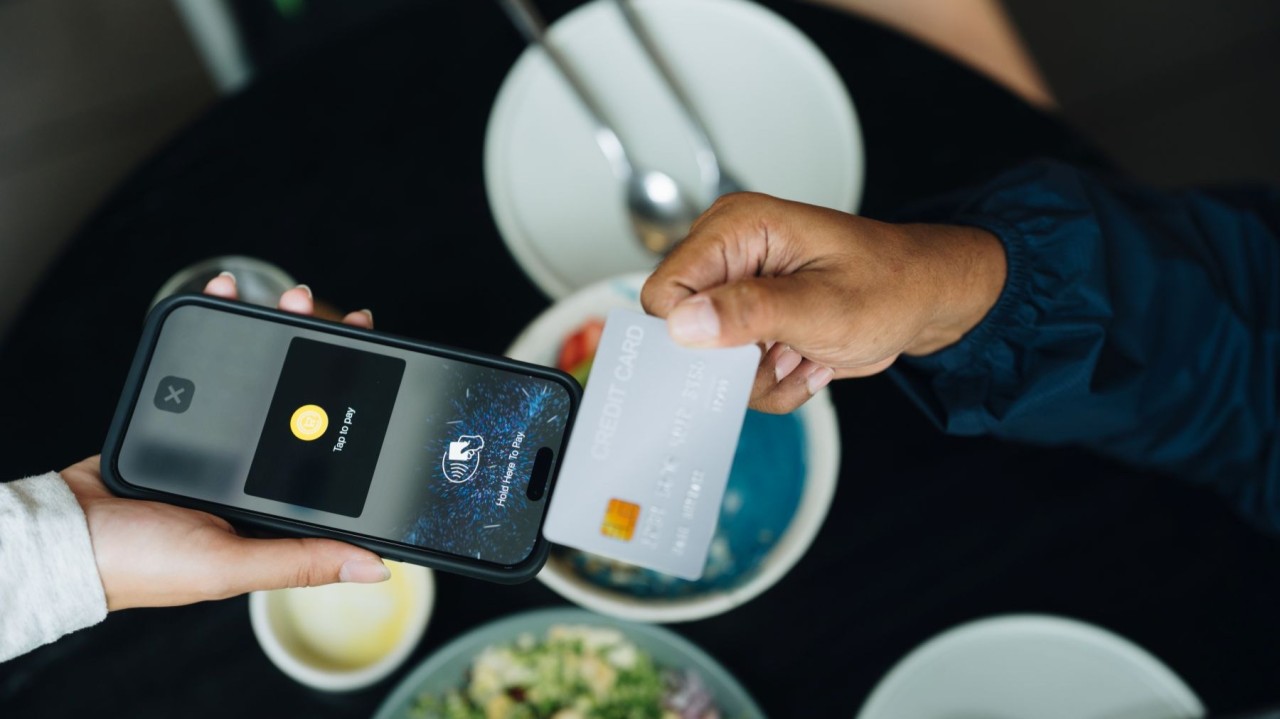
This piece follows my last article focused on the emergent Tap to Everything revolution, which is an example of a much larger theme of how being software-only for payments drives innovation that is otherwise impossible with hardware POS terminals alone. This software-first world I’m nicknaming ‘Software Land’ – a world very different to what the payments industry is used to.
What Tap to Everything illustrates is that there is a blurring of the lines between Card Present (CP) and Card not Present (CNP) transacting; and between in-store payments and consumer-directed e-commerce transactions. This is possible since at the moment the payment is made (and only while the payment is made), the consumer’s device becomes a merchant’s terminal. And just like that, it goes back to being a consumer phone again.
This magic is not actually allowed under the current definitions that underpin card rails and so, a sleepy industry that is used to long innovation cycles has been caught somewhat off guard. However, those of us driving innovation within Software Land are only just getting started. We’ve blurred the distinctions between in-store and e-commerce transactions; between CP and CNP transacting; and between cards being a payment token or an identity token.
However, more than that, in Software Land we are addressing the wants and needs of payers and payees alike—way beyond preventing fraud, to delivering efficiencies for merchants and better experiences for consumers. Consumers are able to enjoy more options like making payments on their own phones; while merchants can reduce their monthly headaches from reconciling transaction records which were previously not well integrated with the products they sold.
Let’s explore how we reached this level of flexibility and innovation in payments, how we secured it, and where the accelerating curve of innovation might take us.
CP was safer and cheaper for merchants
Up until a couple of years ago, there was a clear divide between CP in-person, in-store transacting, and CNP eCommerce buying. The primary difference was the higher level of fraud protection provided by running cryptographic checks on the physical card (hence ‘Card Present’) which was only possible if you arrived at a shop with a physical debit or credit card to run those checks.
If the transaction demanded it, you were also asked to enter a PIN code to verify you were that actual cardholder and the person therefore authorised to spend that money. This physical checking of the card (something you have) and the PIN (something you know) lower the risk of fraud considerably and have traditionally made CP transactions less risky than CNP transactions. The cost to the merchant of CP transactions is consequently lower than getting paid via their website or mobile app as these transactions have to be completed without those physical card checks (hence ‘Card Not Present’). CNP transacting was inherently higher risk and therefore the merchant had to carry some of the cost associated with the additional transaction risk.
Consumer convenience and merchant efficiency drivers remain central in Software Land
Card rails were designed to enable merchants to initiate a payment and the consumer to complete it, whether in person or online. Those payments were always done on a merchant’s device if Card Present (CP) and online if Card Not Present (CNP). The focus was on fraud prevention, while making payments convenient enough for everyone to use card rails. This was the key balancing act.
Convenience fought back with the rise of e-commerce, married with the mass adoption of the internet and so the first battle between convenience and fraud got underway with the industry adopting CVV and 3DS technologies to help deliver both simultaneously.
As TTE (Trusted Transaction Environment) starts to blur the distinction between CP and CNP, the SoftPOS industry is able to direct its focus towards combining security with convenience and workflow integrations.
As CNP and CP payments worlds collide, CP grounding is increasingly important
It is worth stating that Mypinpad, as our name implies, was initially focused on innovating in the SoftPOS space, including enabling secure PIN entry on a mobile device. We were enabling CP transactions long before we provided verification and authentication solutions for CNP transactions.
So, we cracked the toughest piece of the payments authentication puzzle first. Doing this hard part first means we are no longer struggling with the paytech itself and can lift our heads up to focus on meeting consumer and merchant needs through innovating. We are in a better place to focus on delivering consumer convenience, while simultaneously finding efficiencies for merchants through integration of business workflows with the payments themselves and eliminating manual reconciliation work, for example.
And where the workflow integration challenges are heaviest, we believe SoftPOS will be able to make the most difference. This is where the most innovation will be seen over the next few years.
Tap to Everything is the next stage in the migration to Software Land
The latest such software-led payments innovation is Tap to Everything. For example, the innovation brought by Tap to Add and Tap to Pay enables consumers to simply tap their own bank card against their own phone to provision a new card and then use that new card to complete an e-commerce transaction in the comfort of their home.
Not only is the experience a better one (tapping rather than manually entering card numbers), it is also significantly more secure because Mypinpad’s software, being Mobile Payments on COTS certified, does all the same card validity checks as are done in an in-store CP transaction. We can keep the cardholder’s details secret even from the app that they are using—thereby reducing our customers’ PCI-DSS compliance requirements.
And, as you may have read in my last article, Tap to Everything already offers a wealth of use cases which promise consumer convenience, while keeping their card details secure and lowering the risk of fraud still further. The bottom-line is that as we move increasingly into Software Land, the ability to innovate in payments becomes cheaper and quicker. Technology iteration cycles speed up and new use cases emerge at a dizzying pace. Innovations are focused around delivering better consumer experience and finding efficiencies for the merchant:
Enabling a better experience in charity donations
For example, Mypinpad has been working with several charities to enable consumers to give donations more easily, while improving the experience of doing so. Previously, charities ran donation drives using physical POS terminals on the street. These drives were limited by the number of terminals the charity could afford to rent. However, SoftPOS allows many more volunteers to accept payments. Using Tap to Send and Receive (TTS) capabilities on donors’ own devices, way more charity volunteers can take payments from donors in a highly cost-effective manner.
The user interaction for those donors is now much more rewarding as direct feedback on the progress of a specific charity drive (perhaps with an illustrative campaign ‘progress thermometer’) can be shown on their device—even extending that experience into showing a donors’ leaderboard, offering opportunities for greater donor engagement. The entire interface and the ‘do-ability’ of donating is transformed, and can be iteratively improved in Software Land.
Example of combining the booking, ticketing and payment channel within a mobile app – parking apps
We have seen payments for parking transformed by the use of mobile apps that combine booking, ticketing and payment channels in a single mobile app in recent years. These apps can use your mobile’s geolocation information to pinpoint where you are and then offer the nearest available parking spaces and pricing information—even providing easy directions to the carpark’s entrance or spare space on the street.
When the parking time that you have bought is set to expire, you will also get early warnings to top up via the app. If your time in that particular zone has been maxed out, you will get an alert with recommendations on which new parking place to select next. Payments are generally all taken via the app and paid via your digital wallet of choice – it’s seamless and safe.
Example of initiating a transaction on one channel and completing on another: Enabling click, browse and collect in-store
If you are going to a major supermarket on a Saturday morning, you might now elect to pre-order your shopping from the comfort of your kitchen table via the retailer’s mobile app, checking, for example, that the local store has everything on your list in stock. You can then stay in their mobile app to check off everything in your list as you put it into your basket once you’ve arrived in-store. This creates the potential to also check out via that same mobile app, rather than reverting to a retailer’s POS terminal to pay. You have been in-store for the experience of shopping but have paid via mobile app in this instance.
Example of provision of certainty of purchase, guarantee of agent commission and automated back office workflow reconciliation to support mobile salesforces and multi-level marketing sales agents
SoftPOS also works well for multi-level marketing businesses where remote sales agents are very often dropping pre-ordered purchases to their customers and ideally want to take payment for them there and then so that, once the money has moved, they can get their commission paid on that sale.
No longer will they need to carry expensive SIM-enabled POS terminals to make that collection possible. They can make their phone their ‘merchant device’ and ask buyers to tap their card on the agent’s mobile device for payment. In this instance, the consumer has become the merchant, all in the blink of the eye, with the aid of SoftPOS. Furthermore, SoftPOS can be configured to ensure the details of the order can be married with the payment and associated sales commission. The reconciliation can be automated and commission payment deliveries sped up. Payment processing is part of your seamless workflow, which collectively is designed to ensure convenience with accuracy, security and efficiency—all through deep integration.
The question remains, now we are in Software Land and Tap to Everything is here, what else can we do?
So, to continue our journey into Software Land in my next article, I’ll be looking at a series of use cases enabled by SoftPOS which are of particular relevance for SME merchants looking to unlock efficiencies and manage their businesses better. You’ll see that next month – enjoy your summer breaks in the meantime.