Barry Levett
CEO
This month, I decided to focus my article on how this new generation of Software-led Retail EPOS solutions is finally helping to put superior, differentiating Customer Experience (CX) at the heart of in-store POS design.
The history of Point of Sale systems in retail is highly instructive. Over the last 150 years or so, we have moved from the very first mechanical cash registers invented by James Ritty, who founded the National Cash Register company (NCR) way back in 1884; through to the Electronic Cash Register (ECR) which offered the first digital displays and enabled retailers to store transaction data electronically; and on to computerised Point of Sale (POS) systems which were capable of integrating barcode scanners, receipt printers and customer displays in the 1980s.
Modern retail Electronic POS (EPOS) systems have evolved over the last 20 years to include cloud-based solutions, mobile connectivity, and advanced software applications offering real-time analytics, mobile payment options, and enhanced customer experiences. The evolution from mechanical cash registers to sophisticated retail EPOS systems has significantly transformed the retail industry, making transactions more efficient and secure.
However, up until recently, Retail POS systems have not been sufficiently focused on the Customer Experience (CX) itself. This lack of focus on CX is still evident in many recently rolled-out self-checkout solutions, which still feel clunky. The CX is generally led by the Retail EPOS system offering a large touch screen customer display which guides us through their checkout process, including scanning the barcodes on items, or finding them on a visual inventory display, perhaps even weighing them to determine the price of those apples, adding carrier bags, and watching the total cost rise until the point of payment.
More often than not, you then select the payment method via the EPOS screen, and the total is sent across to the separate payment terminal which is attached to the self-checkout station. It all feels slightly disconnected—far from seamless. This configuration represents what I call the Hardware or Hardware Plus-led approach in which software integrations are still difficult, while cybersecurity updates and functionality improvements remain hard to roll out during opening hours.
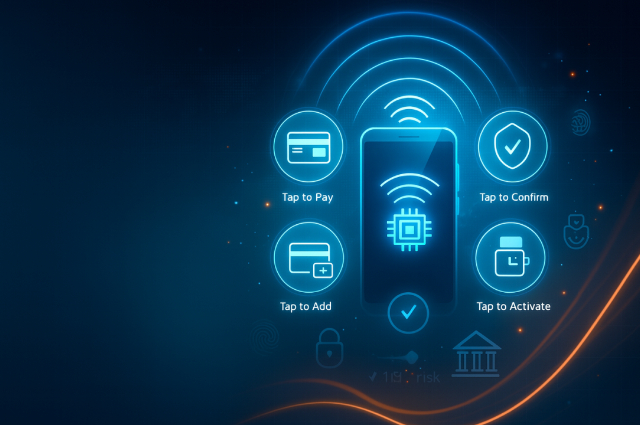
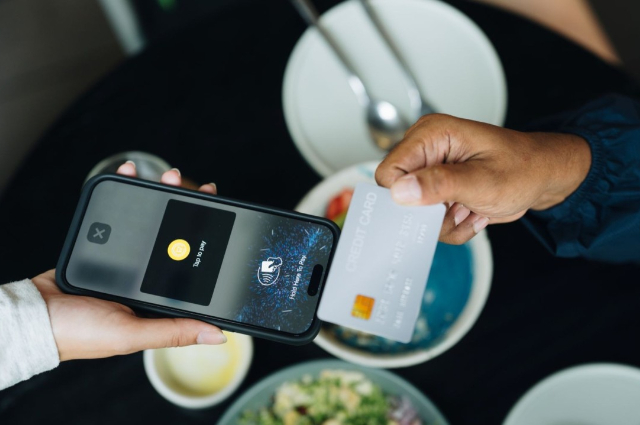
However, in the next generation of EPOS displays now being built, we are finally seeing Software-driven Retail EPOS solutions—characterised by a combination of large touchscreen self-service checkout displays with in-built NFC-based payment capability on-screen, not via those old familiar hardware payment terminals normally located sitting in a hole at the bottom of the digital POS display.
We are also increasingly seeing retail assistants emerging from behind their checkout counters holding handheld tablets and POS terminals, which offer the same ability to browse stock visually using a touchscreen colour display, and then going on to assist customers to pay and issue receipts.
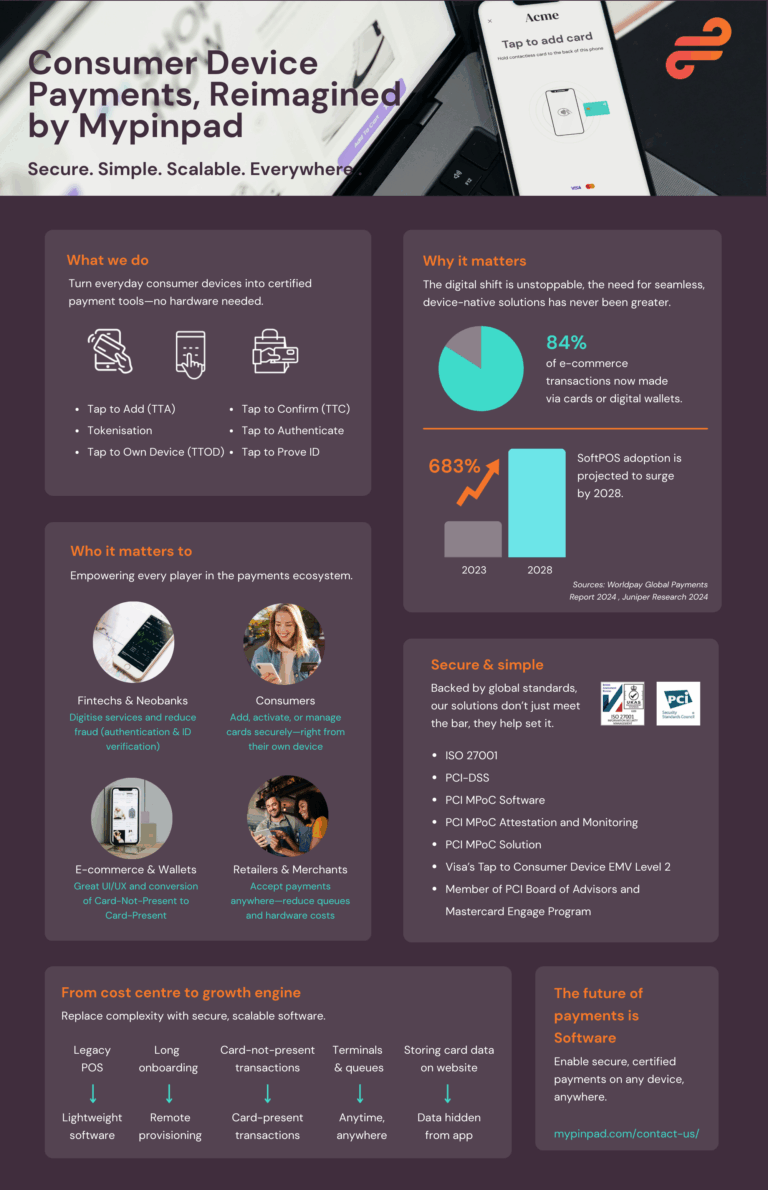
What is going on behind the scenes to enable these smart EPOS systems which combine great CX with smooth and yet highly secure payments? Well, it may well be that a Mypinpad SoftPOS Software Development Kit (SDK) is enabling compliance with the very latest PCI MPOC (Mobile Payments on Commercial Off-The-Shelf) standards. That same SDK can be configured to handle multi-channel payments via the retailer’s app, Mastercard, Visa, Apple Pay, or even via a QR code offering a percentage discount or offer in-store.
That same SDK should also ensure that the smart POS terminal or self-service EPOS display is keeping that payment fully secure so that any personally identifiable information (PII) and banking details are hidden and remain highly secure. Now that you are in ‘software land’, as I prefer to call it, the latest security updates can be delivered ‘on the fly’ in near real-time as new vulnerabilities are found and patches become available.
More than this, now that upgrades and new functionalities are being delivered via fresh APIs and SDKs, it becomes possible to build highly customised CX at point of sale. The relatively low cost and high availability of this software make it possible for retailers to build and roll out bespoke and yet highly secure, seamless user experiences based on even the narrowest of use cases.
So, it’s finally possible to build highly differentiated customer experiences which display purchasing options attractively on a range of touchscreen displays, support browsing and product configuration and selection, and then seamlessly enable purchasing—with or without a retail assistant supporting the customer along the way.
Customer experience is no longer an afterthought when building retail POS systems. CX is finally taking centre stage in the latest generation of POS systems.