Barry Levett
CEO
Anyone taking a close look at some of the larger digital-only neobanks today, cannot fail to be impressed by their speed of acquisition of new customers. For example, Nubank has grown from a standing start in just over 10 years to become a global player—with customers in Columbia, Mexico, Brazil. In that time, it has taken strategic stakes in other neobanks to increase exposure to rapidly growing consumer banking markets in Southeast Asia, India and South Africa.

Nubank moved into profitability in 2023, 10 years after launch—recording a net profit of over US$1bn that year. By that stage, it already had over a 100m customers! Following this move into colossal profitability, its parent Nu Holdings took a US$150m stake in the South Africa-headquartered neobank Tymebank in December 2024—thereby fast tracking exposure to the South Africa and Southeast Asian markets. In a separate deal with Indian banking start-up Jupiter, it gained exposure to the burgeoning Indian banking market. So, less than 12 years on since it launched its first credit card offering, Nubank has become the largest fintech bank in Latin America as well as a global player listed on the New York Stock Exchange valued at over $50bn.
Egg broken up
Compare that with one of the stars of the first wave of ‘digital banks’ (a ‘Digital Bank 1.0’ if you like) Egg. In Egg’s first two years (1998-2000), it signed up just two million customers. Although it briefly moved into profitability during late 2000, it later clocked up large debts during a failed expansion into France. Having put on just another million customers over the next six years, Prudential delisted Egg in 2006—buying back all its shares to exit the LSE. It then sold Egg to Citigroup for just £575m the following year. Citi broke it up—selling off different parts of Egg’s business to Yorkshire Bank and Barclays. So, within 10 years of launch, the brand had all but disappeared from view.
Digital Bank 2.0
What then is the key difference between those Digital Bank 1.0 groundbreakers like Egg, Cahoot (owned by Abbey National), and Smile (owned by Co-op), and the digital-first neobanks (or Digital Bank 2.0 players) that are now sweeping the globe?
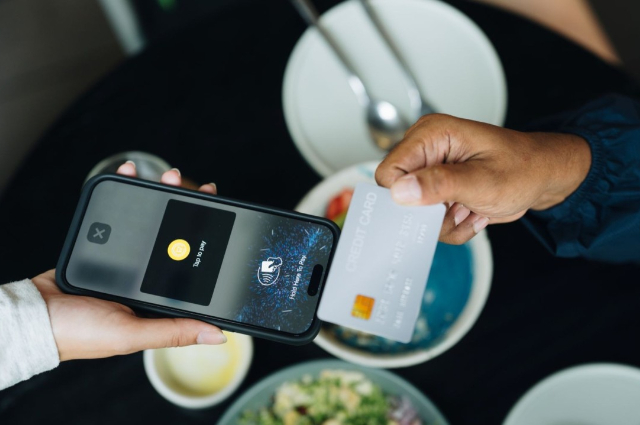
It is tempting to see the neobanks as simply being ‘right place, right time’. All the digital infrastructure is finally in place. Nearly everyone has a smart phone now, and fast broadband and Wi-Fi ubiquity definitely helps. Market penetration of mobile banking is almost total for everyone under the age of 60 now. Mobile apps are slick and offer strong cybersecurity and great customer experience. You can flash your phone at payment terminals to pay instantly via Tap to Pay. There is open banking which has made connectivity and integration between apps and moving money around much easier. Wallets enable multi-currency payments at low cost in the blink of an eye.
Operations key to profitable scaling
All of this is true. However, for me, neobanks’ success today comes down to one core thing: a relentless focus on operational efficiency and specifically a focus on rapid and efficient onboarding of new customers. How else could Nubank put on 100m customers in 11 years (they reached that important milestone in May 2024)? How else could they claim those customers in several countries and on three different continents, admittedly achieving this through deploying surplus capital intelligently to buy valuable stakes in key regional players?
Client onboarding focus
The key to speed to market and rapid customer acquisition is really slick digital-only onboarding processes. There is a world of difference between the speed and customer experience associated with being onboarded into a neobank, by comparison to a traditional bank even today, and interestingly at the dawn of the new millennium Egg could not cope with the speed of client acquisition in its early years, and went digital-only for new credit card applications to slow acquisition down would you believe!
One of the problems Digital Bank 1.0s had was that they were maintaining vast contact centres to offer telebanking as well as internet-based banking alongside it, and mobile banking did not work well until 2010 after Apple iPhone 4 came out, and both Android 2.2 and iOS4 mobile operating systems came through.
Fifteen years on, over US$14 trillion worth of transactions was completed via mobile banking apps and e-wallets in 2024 alone—that’s 25 per cent growth just in the last year! If you take the key demographic snapshot of Millennials, born between 1981 and 1996 and aged 29 to 44 years old today, 78 per cent of them use mobile banking as their primary banking method. And many of them are now reaching their optimum earnings levels so their wallets are getting larger. For Millennials, banking needs to be fast, convenient and mobile-first.
Digital-only processes
No surprise then that most new neobank customers complete their applications for new accounts entirely on their smartphones. It makes sense as that’s where they are doing most of their transacting and banking activity in general once they have their virtual cards on their phones. Many don’t even bother taking the option of ordering a plastic bank card. They may not even have a physical wallet to put it in.
Neobanks have focused from Day One on the quality of their mobile app technology, as well as the operational efficiency and risk analysis which powers it. In our own experience working with Nubank directly, neobanks’ IT systems are so well tuned that they can do near real-time digital-only onboarding.
4 keys to slick client onboarding
There are perhaps four key elements which make for slick digital-only onboarding by leading neobanks today:
1. Ready access to foolproof external databases for checking identity, credit referencing, as well as running Anti Money Laundering (AML) and Know Your Customer (KYC) checks.
2. Ability to pause onboarding and pick up later where you left off. Remember most customers are going through their onboarding on their mobiles—so they may have to take a call or break the process to get off the bus or meet someone.
3. Offer a clear onboarding journey which shows where you are in the process, and what you still need to complete to take delivery of your virtual card.
4. Such is the digital-only focus, that receiving a physical credit card is often an optional extra demanding a different and much longer process. So, you can go live with your virtual card and attach it to your Apple Pay or Google Pay account in your iPhone Wallet within the hour, whereas it might take a couple of weeks to receive the good old fashioned physical card.
Client onboarding is the ultimate moment of truth for a neobank which hasn’t necessarily had time or resources to build its brand in the traditional way. It’s during this vital journey, that customers need to be moved from relatively low, or sometimes zero trust in the brand, to full 100 per cent trust. If the processes are slick and you can get them transacting on their phone within the hour, new customers cannot fail to be impressed. And if they are really impressed, they become advocates for that brand over another neobank vying for the consumers’ attention and wallet share.
Neobanks have built their operations to be fully streamlined from Day One. By contrast, traditional banks which have been streamlining and digitising operations for years. However, most are still not as slick as the neobanks in terms of onboarding new customers, or even opening new accounts for existing customers.
The focus for all companies which want to grow fast and profitably is to build your business around rapid, repeatable and unbreakable operations. This is the lesson that the likes of easyJet, Nando’s, McDonalds and many other global business success stories of the last 20 years or more, have already taught us. Successful neobanks are applying this thinking rapidly and effectively to transform the consumer banking world equally rapidly.