Identifying the Drivers and Use Cases for Tap to Everything

Barry Levett

In this month’s article, I decided to explore a range of use cases which show how Tap to Everything can improve the user experience for buyers, thereby reducing transaction abandonment and fraud risk for merchants.
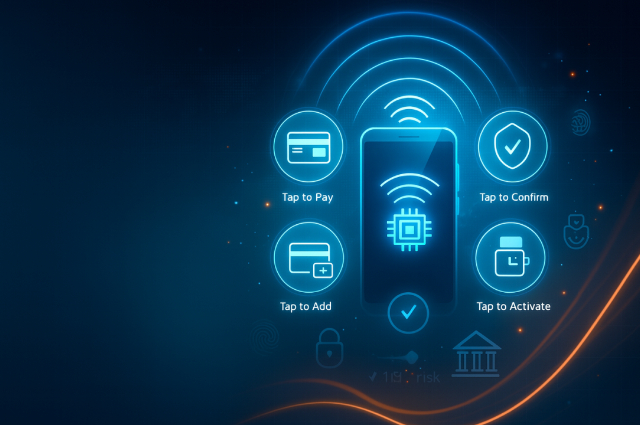
In my last article, I detailed why there has been a steady blurring of the lines between Card Present (CP) and Card not Present (CNP) transacting and explained why this demarcation of payment types is rapidly becoming less useful.

What is much more important today is to define the type of transaction, the user experience that is desirably associated with that transaction, and whether the merchant or ecommerce provider is prepared to retain the risk associated with that payment, or shift some of its risk and the associated fraud liability onto the card issuer or holder. First and foremost, it’s important to identify which key drivers are at work that create the need for extra layers of authentication and/or transfer of liability away from the merchant.

Larger ecomm sites focused on cutting cart abandonment

For example, having a frictionless experience at online checkouts is invaluable to most large ecommerce providers in terms of reducing their ‘abandoned cart’ levels considerably. The resulting lower abandoned cart percentage generated by superior user experience (UX) more than offsets the fact that many ecommerce sites (and associated mobile apps) are carrying most (if not all) of the risk associated with these transactions.

It’s worth bearing in mind that ecommerce cart abandonment levels are still pretty high. According to the Baymard Institute’s 2024 study, average cart abandonment levels stand at 70.19%. That percentage rises close to 80% for ecomm purchases being completed via your smartphone.

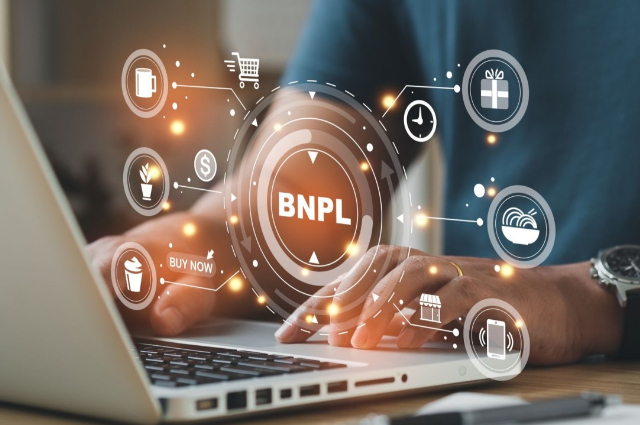
Reasons given for cart abandonment are largely linked to poor UX. Key reasons for abandonment uncovered in consumer studies are the discovery of extra costs (shipping, tax, fees) at checkout, as well as insisting on account creation (more on this later), long/complex checkout processes, lack of trust, slow delivery times or limited payment options. So, not offering a Buy Now Pay Later (BNPL) option for larger transactions is now leading to higher abandonment levels for more expensive goods bought online, for example.

One way that ecomm operations manage their exposure to the risk of fraudulent transactions, and contain chargeback levels within sub-1% tolerances mandated by acquirers, is by waiting for payment funds to clear before shipping any goods. Tap to Pay functionality can be used to enable rapid checkout for guests who do not want to sign up for an account via your mobile app to complete a transaction. More on this later.

High value ecomm transactions could use Tap to Everything to reduce fraud risk while reducing cart abandonment

However, for higher-value goods and services which you are paying for online: perhaps buying long-haul flights or booking hotel accommodation overseas, rather than risking a card being rejected and the affected customer simply walking away, the application of Tap to Everything looks to have its place to manage elevated transaction risk.

We could inject another level of authentication into the transaction process by, say, asking the buyer to tap their card on the relevant mobile app screen on their phone (or Tap to Pay) to prove that they have the card that they are using to buy these things. It is entirely possible you could also ask for them to tap in their PIN number as well (‘Tap+PIN’ entry), or the card’s CVV, to complete the transaction. By doing so, fraud risk falls dramatically and liability shifts from the merchant to the card issuer or card holder.

Riskier transactions offer further use cases for Tap to Everything

For those buying an expensive restaurant meal via a mobile app that they may not even be signed into, placing a bet online, buying crypto, or making a series of expensive ecommerce transactions one after the other in quick succession, it understandably makes sense to build Tap to Pay (TTP) functionality into the transaction process. This reduces the inevitably elevated fraud and chargeback risks associated with these sorts of transactions and buying behaviours, while simultaneously passing remaining transaction risk towards the issuer and away from the merchant.

TTP is not only a better customer experience (tapping rather than manually entering card numbers). It is also significantly more secure because Mypinpad, as a PCI-certified solutions provider, can keep the cardholder’s details secret even from the app that they are using — thereby reducing our merchants’ PCI-DSS compliance requirements.

TTP also offers a more secure payment method which helps protect customer data and reduces fraud risk. This is achieved by tokenising card data either via Card on File (CoF) or Network Tokens, the latter being much preferred since its ‘device binding’ capability reduces CVV reliance over time. This provisioning, plus the tokenisation model, significantly reduces the risk of cardholder data loss while providing a simple, clear user experience. There’s less risk of digital theft, or abandoned carts.

Guest usage of occasional use mobile apps

Many users today feel that their smartphones are already overloaded with mobile apps. For occasional use services, we don’t particularly want to retain an account associated with a dedicated mobile app to support it. Take the case where you are on a road trip through Europe. You get to a city in France which demands use of a mobile app to pay to park on the street near your hotel. You don’t want to create a new account for that city’s mobile parking app, then assign a payment card to that account. You just want to pay for parking and run.

The app provider does not particularly want you on their customer database either, because you are unlikely to use the app again, and if you do happen to come back to that place on another occasion, you will never remember your credentials – creating lots of support queries and messages to get logged back in and pay.

Far better to give these types of visitors the option to check out as a guest, perhaps paying via a one-time QR code which is provided via the app without the need to create an account to access that code. TTP can be used to pay via the QR code. According to a recent industry report, approximately 60% of mobile app‑based transactions are completed as guests, rather than by logged‑in account holders.

Tap to Confirm already gaining traction for verification use cases

Although most of the use cases above are Tap to Pay-focused, Tap to Confirm (TTC) is naturally finding a great many use cases amongst applications which demand verification. For example, Mypinpad is enabling rail season ticket holders to prove that they are the holder of a given season ticket by showing their card to the barrier reader rather than showing the season ticket itself. In this way, the rail operator knows that the person who has bought the season ticket is indeed the same person going through the barriers. This is a TTC application which we enabled over two years ago for a major European transport operator.

We are also working with a major bank using TTC as part of Step-up Authentication (SA) where risk levels associated with a specific transaction have breached accepted norms.

Step-up Authentication (SA) is already a proven way to strike a balance between security and friction. It ensures users can access some resources with one set of credentials but will be prompted for more credentials (normally requiring a third authentication factor) when personal transaction ‘behaviour’ norms are breached.

So, in most cases where transaction size looks to be in the ‘normal range’ and it is being completed via a smart device which is located in the country it is normally in, then two factor authentication (2FA) suffices.

However, if you were to make a request of your bank to wire several thousand dollars to a bank account in North Africa from a device located in a country you are not normally in, that might trigger SA, resulting in a request for another factor of authentication to prove you are who you say you are, and that your phone hasn’t been stolen or hacked into. That may include one of the above ‘proof of inherence’ biometric factors like facial, iris or fingerprint scan, and perhaps requiring secure PIN entry for the card being used for the transaction via Tap to Confirm. So, in this way CNP transactions naturally flex into CP authentication, and in doing so, fraud risk is lowered and liability passed onto the issuer.

We are seeing increasing demand for SA deployments to dynamically adjust authentication levels according to the degree of risk associated with specific transactions. It’s a relatively new development which makes sense in a world where device thefts, combined with digital identity theft, is sadly becoming more commonplace; while transaction history analysis can be run ‘on the fly’ using AI to spot potential transaction anomalies and increase authentication requirements dynamically to combat the increased risk associated with those anomalous transactions.

TTC usage means that your PIN could join the growing 3DS mix

As indicated above, PIN entry can be brought back in as part of TTC flows if an extra layer of authentication is desirable alongside biometrics associated with unlocking your mobile device, for example. There is now some speculation that your PIN number might be added to the mix of the online fraud prevention and authentication protocol 3DS.

The use of OTPs (one-time passwords sent by text or email), together with biometrics (Face ID or fingerprint recognition already in use to unlock your phone), is already in wide use for mobile payments. Certainly, there is an increasing number of use cases associated with verifying you are who you say you are.

Tap to Activate gaining ground with banks

As the number of physical high street bank branches and associated ATMs dwindles across much of the developed world, and the percentage of transactions which are completed online increases (compared to those completed in-store), it increasingly makes sense to be able to activate a new bank card via Tap to Activate at home or on the move.

The innovation brought by Tap to Activate offers the ability for a consumer to just tap their own bank card against the back of their own phone to provision a card and then use the freshly activated card to complete an ecommerce transaction in the comfort of their home.

Tap to Everything an ideal enabler of Smart City multi-modal travel

It is conceivable that TTC could be used for smart city transport applications where, in the future, people will hold a ‘smart pass’ to cross a city in the most efficient, multi-modal manner – moving from e-bike, to electric bus, onto a tram, then underground and overground rail services, even perhaps extending to gaining access to and paying for a hire car to exit the city. It is conceivable that this type of application could lead to Tap to Pay as well as Tap to Confirm in one single multi-modal journey.

Tap to Everything is enabling greater payments agility and is driving market innovation

It is clear that Tap to Everything already offers an array of payments and non-payment applications, many of which we are already building out for banks, ecommerce providers and merchants.

It can help improve the user experience in ecommerce and make card activation, provisioning and even the updating of card details (changing the PIN number of a card for example) light work for consumers. It can help merchants to reduce fraud risk and pass fraud liability to card issuers (or card holders themselves) — increasing authentication levels as risk levels rise in real time.

The benefits in terms of reduced cart abandonment, reduced fraud and chargebacks and being able to accommodate payments by unregistered users of mobile apps are clear. We are finding new Tap to Everything use cases on a near weekly basis right now. So, it’s opening up a wave of innovation in the market.
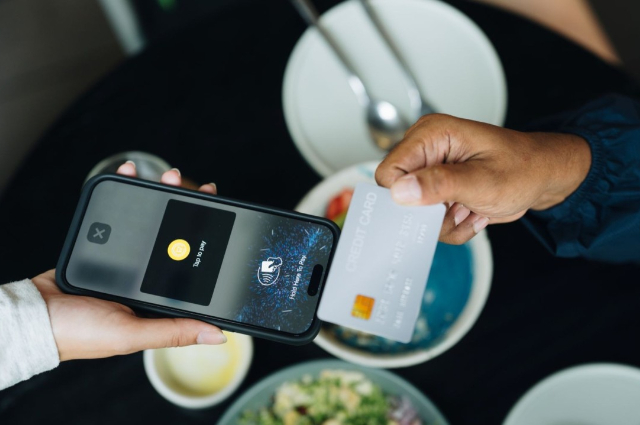
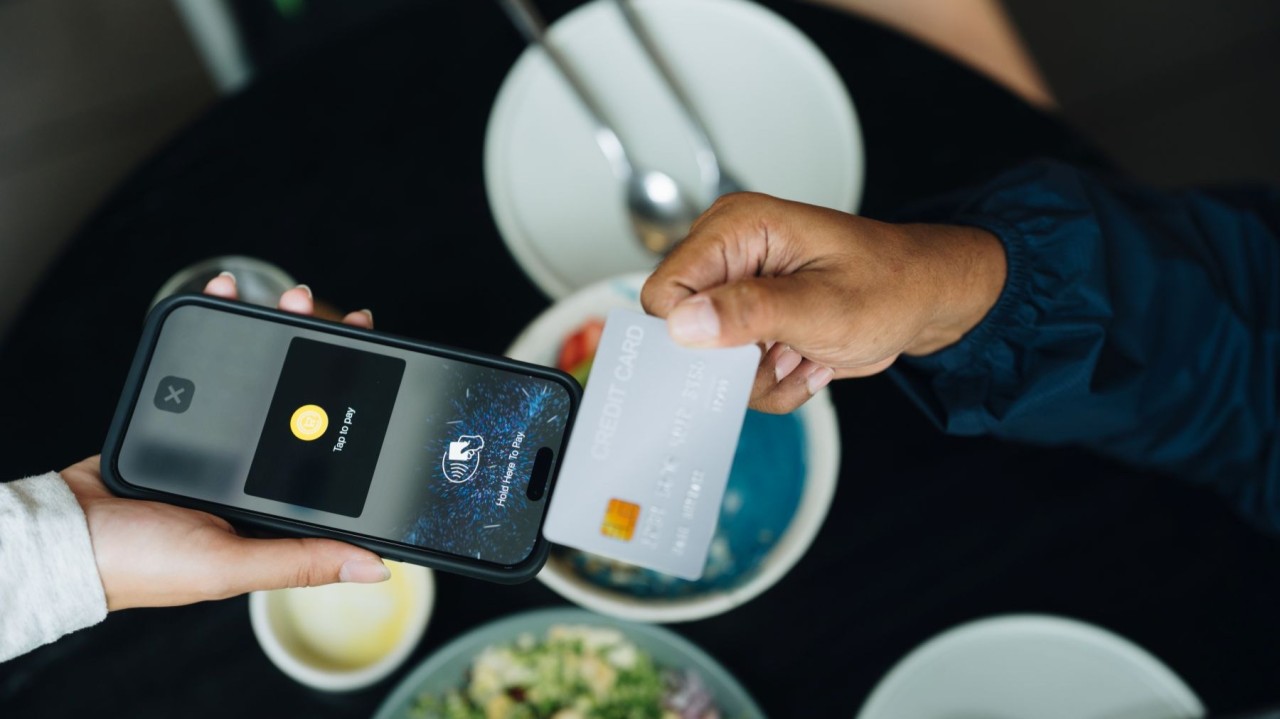
>> Curious why CP vs. CNP may no longer be the lens to view modern payments through? Get the full breakdown here

‘Software Land’ provides springboard for accelerating innovation cycles in payments

Barry Levett

This piece follows my last article focused on the emergent Tap to Everything revolution, which is an example of a much larger theme of how being software-only for payments drives innovation that is otherwise impossible with hardware POS terminals alone. This software-first world I’m nicknaming ‘Software Land’ – a world very different to what the payments industry is used to.

What Tap to Everything illustrates is that there is a blurring of the lines between Card Present (CP) and Card not Present (CNP) transacting; and between in-store payments and consumer-directed e-commerce transactions. This is possible since at the moment the payment is made (and only while the payment is made), the consumer’s device becomes a merchant’s terminal. And just like that, it goes back to being a consumer phone again.

This magic is not actually allowed under the current definitions that underpin card rails and so, a sleepy industry that is used to long innovation cycles has been caught somewhat off guard.  However, those of us driving innovation within Software Land are only just getting started. We’ve blurred the distinctions between in-store and e-commerce transactions; between CP and CNP transacting; and between cards being a payment token or an identity token.

However, more than that, in Software Land we are addressing the wants and needs of payers and payees alike—way beyond preventing fraud, to delivering efficiencies for merchants and better experiences for consumers. Consumers are able to enjoy more options like making payments on their own phones; while merchants can reduce their monthly headaches from reconciling transaction records which were previously not well integrated with the products they sold.

Let’s explore how we reached this level of flexibility and innovation in payments, how we secured it, and where the accelerating curve of innovation might take us.

CP was safer and cheaper for merchants

Up until a couple of years ago, there was a clear divide between CP in-person, in-store transacting, and CNP eCommerce buying. The primary difference was the higher level of fraud protection provided by running cryptographic checks on the physical card (hence ‘Card Present’) which was only possible if you arrived at a shop with a physical debit or credit card to run those checks.

If the transaction demanded it, you were also asked to enter a PIN code to verify you were that actual cardholder and the person therefore authorised to spend that money. This physical checking of the card (something you have) and the PIN (something you know) lower the risk of fraud considerably and have traditionally made CP transactions less risky than CNP transactions. The cost to the merchant of CP transactions is consequently lower than getting paid via their website or mobile app as these transactions have to be completed without those physical card checks (hence ‘Card Not Present’). CNP transacting was inherently higher risk and therefore the merchant had to carry some of the cost associated with the additional transaction risk.

Consumer convenience and merchant efficiency drivers remain central in Software Land

Card rails were designed to enable merchants to initiate a payment and the consumer to complete it, whether in person or online. Those payments were always done on a merchant’s device if Card Present (CP) and online if Card Not Present (CNP). The focus was on fraud prevention, while making payments convenient enough for everyone to use card rails. This was the key balancing act.

Convenience fought back with the rise of e-commerce, married with the mass adoption of the internet and so the first battle between convenience and fraud got underway with the industry adopting CVV and 3DS technologies to help deliver both simultaneously.

As TTE (Trusted Transaction Environment) starts to blur the distinction between CP and CNP, the SoftPOS industry is able to direct its focus towards combining security with convenience and workflow integrations.

As CNP and CP payments worlds collide, CP grounding is increasingly important

It is worth stating that Mypinpad, as our name implies, was initially focused on innovating in the SoftPOS space, including enabling secure PIN entry on a mobile device. We were enabling CP transactions long before we provided verification and authentication solutions for CNP transactions.

So, we cracked the toughest piece of the payments authentication puzzle first. Doing this hard part first means we are no longer struggling with the paytech itself and can lift our heads up to focus on meeting consumer and merchant needs through innovating. We are in a better place to focus on delivering consumer convenience, while simultaneously finding efficiencies for merchants through integration of business workflows with the payments themselves and eliminating manual reconciliation work, for example.

And where the workflow integration challenges are heaviest, we believe SoftPOS will be able to make the most difference. This is where the most innovation will be seen over the next few years.

Tap to Everything is the next stage in the migration to Software Land

The latest such software-led payments innovation is Tap to Everything. For example, the innovation brought by Tap to Add and Tap to Pay enables consumers to simply tap their own bank card against their own phone to provision a new card and then use that new card to complete an e-commerce transaction in the comfort of their home. 

Not only is the experience a better one (tapping rather than manually entering card numbers), it is also significantly more secure because Mypinpad’s software, being Mobile Payments on COTS certified, does all the same card validity checks as are done in an in-store CP transaction. We can keep the cardholder’s details secret even from the app that they are using—thereby reducing our customers’ PCI-DSS compliance requirements.

And, as you may have read in my last article, Tap to Everything already offers a wealth of use cases which promise consumer convenience, while keeping their card details secure and lowering the risk of fraud still further. The bottom-line is that as we move increasingly into Software Land, the ability to innovate in payments becomes cheaper and quicker. Technology iteration cycles speed up and new use cases emerge at a dizzying pace. Innovations are focused around delivering better consumer experience and finding efficiencies for the merchant:

Enabling a better experience in charity donations

For example, Mypinpad has been working with several charities to enable consumers to give donations more easily, while improving the experience of doing so. Previously, charities ran donation drives using physical POS terminals on the street. These drives were limited by the number of terminals the charity could afford to rent. However, SoftPOS allows many more volunteers to accept payments. Using Tap to Send and Receive (TTS) capabilities on donors’ own devices, way more charity volunteers can take payments from donors in a highly cost-effective manner.

The user interaction for those donors is now much more rewarding as direct feedback on the progress of a specific charity drive (perhaps with an illustrative campaign ‘progress thermometer’) can be shown on their device—even extending that experience into showing a donors’ leaderboard, offering opportunities for greater donor engagement. The entire interface and the ‘do-ability’ of donating is transformed, and can be iteratively improved in Software Land.

Example of combining the booking, ticketing and payment channel within a mobile app – parking apps

We have seen payments for parking transformed by the use of mobile apps that combine booking, ticketing and payment channels in a single mobile app in recent years. These apps can use your mobile’s geolocation information to pinpoint where you are and then offer the nearest available parking spaces and pricing information—even providing easy directions to the carpark’s entrance or spare space on the street. 

When the parking time that you have bought is set to expire, you will also get early warnings to top up via the app. If your time in that particular zone has been maxed out, you will get an alert with recommendations on which new parking place to select next. Payments are generally all taken via the app and paid via your digital wallet of choice – it’s seamless and safe.

Example of initiating a transaction on one channel and completing on another: Enabling click, browse and collect in-store

If you are going to a major supermarket on a Saturday morning, you might now elect to pre-order your shopping from the comfort of your kitchen table via the retailer’s mobile app, checking, for example, that the local store has everything on your list in stock. You can then stay in their mobile app to check off everything in your list as you put it into your basket once you’ve arrived in-store. This creates the potential to also check out via that same mobile app, rather than reverting to a retailer’s POS terminal to pay. You have been in-store for the experience of shopping but have paid via mobile app in this instance.

Example of provision of certainty of purchase, guarantee of agent commission and automated back office workflow reconciliation to support mobile salesforces and multi-level marketing sales agents

SoftPOS also works well for multi-level marketing businesses where remote sales agents are very often dropping pre-ordered purchases to their customers and ideally want to take payment for them there and then so that, once the money has moved, they can get their commission paid on that sale.

No longer will they need to carry expensive SIM-enabled POS terminals to make that collection possible. They can make their phone their ‘merchant device’ and ask buyers to tap their card on the agent’s mobile device for payment. In this instance, the consumer has become the merchant, all in the blink of the eye, with the aid of SoftPOS. Furthermore, SoftPOS can be configured to ensure the details of the order can be married with the payment and associated sales commission. The reconciliation can be automated and commission payment deliveries sped up. Payment processing is part of your seamless workflow, which collectively is designed to ensure convenience with accuracy, security and efficiency—all through deep integration.

The question remains, now we are in Software Land and Tap to Everything is here, what else can we do?

So, to continue our journey into Software Land in my next article, I’ll be looking at a series of use cases enabled by SoftPOS which are of particular relevance for SME merchants looking to unlock efficiencies and manage their businesses better. You’ll see that next month – enjoy your summer breaks in the meantime.

>> Read more on how the Tap to Everything revolution is rapidly gaining traction

The Tap to Everything revolution is rapidly gaining traction only a few months on from Mastercard’s launch of its Tap to Pay pilot

Barry Levett

This month, I’ve decided to explore how the ‘Tap to Everything’ revolution is making eCommerce faster, safer, and simpler for an increasing number of consumers.

Tap to Add wallet-led demand

Just four months on since Mastercard officially launched its Tap to Pay (TTP) pilot for eCommerce and in-app mobile payments, Mypinpad is already providing Tap to Add (TTA) and Tap to Pay (TTP) functionality to some of the largest eCommerce providers in the world. So, we thought it was worth taking a closer look at the increasing popularity of TTA functionality, because it’s clearly meeting rising demand for faster and yet still highly secure card provisioning for eCommerce transactions.

The TTA and TTP functionality, which we are rolling out for several customers right now, is principally being used to add credit or debit cards to consumers’ digital wallets (aka ‘provisioning’, the TTA part), often continuing on to a payment (the TTP part). These are part of Card Not Present (CNP) eCommerce payment flows, usually requiring 3DS or CVV authentication if a payment is over a certain amount (demanding additional authentication layers to be dynamically applied).

The innovation brought by TTA/TTP is the ability for a consumer to just tap their own bank card against their own phone to provision a card and complete an eCommerce transaction in the comfort of their home. Our TTA software enables that. Not only is the experience a better one (tapping rather than manually entering card numbers), it is also significantly more secure because Mypinpad, as a PCI-certified solutions provider, can keep the cardholder’s details secret even from the app that they are using – thereby reducing our customers’ PCI-DSS compliance requirements.

In our own app, we give our customers the option to capture the CVV of that card for high-value transactions, and a further optional fallback to enter the consumer’s primary bank account number (PAN) in a secure way.

TTA/TTP also offers a more secure payment method which helps protect customer data and reduces fraud risk. This is achieved by tokenising card data either via Card on File (COF) or Network Tokens, the latter being much preferred since its ‘device-binding’ capability reduces CVV reliance over time. This provisioning-plus-tokenisation model significantly reduces the risk of cardholder data loss, while providing a simple, clear user experience. There’s less risk of digital theft, or abandoned carts.

Tap to Verify / Confirm

Once your card is provisioned through TTA, it becomes easy to Tap to Verify (TTV) as well. So, what’s the merit of TTV in eCommerce today? As more and more transactions are authenticated by mobile devices, new fraud risks have emerged, which must be addressed. For example, many users allow their family members to unlock their phones so their children can play mobile games or their partners can answer messages. However, this reduces the certainty which banks need — that a registered fingerprint is indeed that of the cardholder, rather than that of another family member. Tapping a card mitigates this risk while providing a simple user journey — just tap when prompted.

To ensure that the person doing the transacting is indeed authorised to pay that bill, extra layers of authentication are now being designed into the payments journey. For example, for one major national bank, we recently applied Tap to Verify or Confirm capability via Step-up Authentication. This requires the correct PIN number to be inputted on the mobile device to complete larger-value or suspect transactions. Many eCommerce apps now demand the selected card’s CVV number for additional verification that the buyer has access to (and the authority to use) the relevant card.

Tap to Activate and Tap to Change PIN

Innovative use cases from what many now call the Tap to Everything movement just keep coming. For example, there is Tap to Activate, which makes it possible for customers to securely confirm to their banks that their new card arrived safely and is ready for use. Historically, issuing banks have had to use expensive methods of securely distributing new cards, whereas with Tap to Activate, even regular mail is sufficient.

Going beyond this is the ability to run so-called ‘issuer scripts’ to allow for actual card updating such as resetting counters, unblocking a card or changing a PIN — all from the comfort of your own couch. This saves a visit to an ATM or a shop where physical use of the card is required. Customers can now simply use the banking app they already trust, which now has this new functionality embedded.

Tap to Send/Receive for P2P payments

Further down the road, we see more use cases for Tap to Send/Receive (TTS) where card rails are used for person-to-person (P2P) payments. P2P payment solutions such as Mastercard Send and Visa Direct are not new and have had some success in a limited number of markets. The relatively high cost and low market visibility have limited their adoption. With tapping as the user experience, using a card or another phone, P2P payments could expect a new lease of life with TTS for some use cases.

Tap to Everything is here

Hopefully, some of the above real-world examples and use cases prove that the Tap to Everything vision, which was just that a year or two ago, is rapidly becoming a reality. And it’s touching all parts of the payments ecosystem, from issuers through to eCommerce retailers and customers.

The benefits of exploring the new trend are legion. Tap to Everything is bringing easier card provisioning, slicker and more secure authentication, and fewer eCommerce transaction failures. Chargeback requests are falling, and the customer experience is improving as these changes are being applied. Here at Mypinpad, we see ourselves as enabling the Tap to Everything revolution — which is clearly gathering momentum.

>> Learn more about Mypinpad’s consumer device innovation and how it works here


Key to the rise of BNPL is seamless Customer Experience even as tighter regulation is demanded of instalment plan-based transactions

Barry Levett

This month I decided to take a closer look at the relentless rise of Buy Now Pay Later (BNPL) all over the world and look back to the origins of easy instalment buying in Latin America to probe why it is such a widespread consumer buying phenomenon today.

To understand the current widespread appeal of BNPL apps like Klarna, Affirm, Afterpay, PayPal, and Zip today, it’s worth looking back as far as the 1990s, when the concept of paying by instalments rose to prominence in Latin American countries such as Brazil and Argentina.

In LatAm, the concept of paying by instalments, known locally as ‘parcelamento’ or ‘cuotas’ – enabling consumers to spread the cost of purchases over time – became a significant driver of economic growth in the region. From high-value consumer goods to everyday commodities, the option to pay by instalments was embedded into consumer behaviour in this part of the world more than 30 years ago.

Part of this was about increasing financial accessibility. In 1990, about 70 per cent of the adult population of Brazil, for example, had no bank account at all. Instalment payments enabled the majority of adult unbanked consumers to access goods and services without the immediate need for substantial cash savings or access to traditional credit facilities.

During this period, many Latin American countries also suffered severe inflationary surges, which further boosted instalment plan adoption as paying by instalments enabled consumers to lock in the total purchase price as it was at the moment of purchase, effectively hedging against short-term price rises. This consumer behaviour became cemented even as more and more people in this part of the world gained bank accounts and began buying more goods and services online using their bank cards. Interest-free instalment plans became the growing global Buy Now Pay Later (BNPL) phenomenon it is today and many of the emerging neobanks its champions.

BNPL used for lower-value transactions

BNPL’s growth numbers are impressive. Survey data developed by Argentine research firm D’Alessio IROL shows that in 2019, 77% of Argentine households were paying ‘cuotas’, up from 68% in 2018. Other data also tell us that instalments are increasingly being used for surprisingly low-ticket items and that their usage increases in line with purchase price: a 2019 consumer survey conducted by EBANX showed that 65% of consumers preferred to pay via instalments for products priced in the US$25-$50 range, and this percentage grows to 79% for products valued at US$50 or more.

In-store BNPL transaction volumes also rising

Although elsewhere in the world, paying by instalments was slower to catch on, there is no doubt that over the last five years, with the rise of BNPL platforms like Klarna, we’ve seen its swift consumer adoption for both in-store and via eCommerce transactions.

So, today, BNPL transactions account for approximately 10-15% of all e-commerce transactions worldwide, while nearly 40% of consumers in France were using BNPL services by 2021. Although the UK has been a little further behind in terms of paying by easy interest-free instalments, as of this year, 42% of UK adults are now using BNPL services. Indeed, as of 2023, BNPL represented about 10% of the UK’s total eCommerce transactions valued at approximately £11.46 billion. And in-store, BNPL already accounts for around 5% of UK in-store retail sales, to a value of £6.4 billion.

According to Bloomberg, the BNPL market in the UK has increased tenfold over the last five years, driven by a combination of the cost-of-living crisis, higher interest rates from other forms of credit, and the disappearance of the alternative – payday loans.

There is no doubt that merchants are seeing the opportunity to increase sales and attract more consumers to buy from them. Furthermore, research shows that consumers are prepared to buy 15-20% more expensive products if they can pay by instalments. Online basket values rise by even more than that for younger consumers – most notably Gen Zers and Millennial-age consumers now aged 13 to 44.

BNPL CAGR at 9%

Digital payment options like PayPal’s Pay in 4, Klarna, Afterpay, and Affirm have grown increasingly popular in online shops across the world. According to Statistica, the global Compound Annual Growth Rate of this alternative payment method is estimated to be nearly 9% between 2023 and 2028.

While the benefits are substantial, businesses must navigate certain challenges when implementing instalment payment systems. One major concern is credit risk management. Since extending credit always comes with the possibility of defaults, businesses must have strong systems in place to handle potential losses, charge late payment penalties and seek recovery of late payments, for example.

BNPL regulation coming

In addition, it is clear from our investigation into several countries’ National Payments Visions, which I covered here back in February, tighter regulation of the BNPL space is coming everywhere. The UK financial regulator, the Financial Conduct Authority, has already been tasked by the UK Government with rolling out new regulation covering BNPL by July 2026. The new rules will require BNPL providers to make sure customers can afford repayment before offering a loan, and to issue “clear, simple and accessible” information about loan agreements in advance. Draft regulation also says BNPL companies will need to offer refunds if consumers run into problems with the products they purchase.

The new European Directive on Consumer Credit, adopted by the European Council on 12th October 2023, focuses on credit agreements with a value of under €200. This new directive seeks to set transparent guidelines for split payments and curb excessive debt scenarios. These regulatory changes have the potential to bring about a transformation in the business model and marketing practices of BNPL services all over the world.

In the States, in May 2024, the Consumer Financial Protection Bureau (CFPB) issued an interpretive rule classifying BNPL lenders as credit card issuers under the Truth In Lending Act (TILA), and it has since implemented Regulation Z. This rule aimed to extend consumer protections traditionally associated with credit cards to BNPL products, such as the right to dispute charges and requirements for clear disclosures. However, earlier this month, the CFPB announced plans to revoke this interpretive rule due to legal challenges and industry pushback. Despite this recent development, it is clear that tighter regulation of BNPL remains inevitable.

Emphasis on smooth CX as BNPL is regulated

So, the emphasis, both in eCommerce and in-store POS transactions, must be on building seamless Customer Experience (CX) into the checkout process, despite the increasing likelihood that consumer protection guardrails and credit checks will need to be built into transaction processes, for the inevitably increasing number of consumers electing to pay by easy interest-free instalments.

At Mypinpad, we are already enabling some of these more complex payment journeys – building this functionality into our SDKs – enabling delivery and signing of BNPL contract agreements within payments workflow integrations for the likes of Brazil-headquartered Nubank and Mercado Pago. We anticipate working with more acquirers to create seamless and yet compliant BNPL processes and workflows as BNPL regulations start to bite around the world.

>> Read our insights on National Payment Visions and the need to ensure digital payments keep flowing while keeping citizens’ money safe

A new generation of game-changing, software-led Retail EPOS solutions is now emerging

Barry Levett

This month, I decided to focus my article on how this new generation of Software-led Retail EPOS solutions is finally helping to put superior, differentiating Customer Experience (CX) at the heart of in-store POS design.

The history of Point of Sale systems in retail is highly instructive. Over the last 150 years or so, we have moved from the very first mechanical cash registers invented by James Ritty, who founded the National Cash Register company (NCR) way back in 1884; through to the Electronic Cash Register (ECR) which offered the first digital displays and enabled retailers to store transaction data electronically; and on to computerised Point of Sale (POS) systems which were capable of integrating barcode scanners, receipt printers and customer displays in the 1980s.

Modern retail Electronic POS (EPOS) systems have evolved over the last 20 years to include cloud-based solutions, mobile connectivity, and advanced software applications offering real-time analytics, mobile payment options, and enhanced customer experiences. The evolution from mechanical cash registers to sophisticated retail EPOS systems has significantly transformed the retail industry, making transactions more efficient and secure.

However, up until recently, Retail POS systems have not been sufficiently focused on the Customer Experience (CX) itself. This lack of focus on CX is still evident in many recently rolled-out self-checkout solutions, which still feel clunky. The CX is generally led by the Retail EPOS system offering a large touch screen customer display which guides us through their checkout process, including scanning the barcodes on items, or finding them on a visual inventory display, perhaps even weighing them to determine the price of those apples, adding carrier bags, and watching the total cost rise until the point of payment.

More often than not, you then select the payment method via the EPOS screen, and the total is sent across to the separate payment terminal which is attached to the self-checkout station. It all feels slightly disconnected—far from seamless. This configuration represents what I call the Hardware or Hardware Plus-led approach in which software integrations are still difficult, while cybersecurity updates and functionality improvements remain hard to roll out during opening hours.

However, in the next generation of EPOS displays now being built, we are finally seeing Software-driven Retail EPOS solutions—characterised by a combination of large touchscreen self-service checkout displays with in-built NFC-based payment capability on-screen, not via those old familiar hardware payment terminals normally located sitting in a hole at the bottom of the digital POS display.

We are also increasingly seeing retail assistants emerging from behind their checkout counters holding handheld tablets and POS terminals, which offer the same ability to browse stock visually using a touchscreen colour display, and then going on to assist customers to pay and issue receipts.

What is going on behind the scenes to enable these smart EPOS systems which combine great CX with smooth and yet highly secure payments? Well, it may well be that a Mypinpad SoftPOS Software Development Kit (SDK) is enabling compliance with the very latest PCI MPOC (Mobile Payments on Commercial Off-The-Shelf) standards. That same SDK can be configured to handle multi-channel payments via the retailer’s app, Mastercard, Visa, Apple Pay, or even via a QR code offering a percentage discount or offer in-store.

That same SDK should also ensure that the smart POS terminal or self-service EPOS display is keeping that payment fully secure so that any personally identifiable information (PII) and banking details are hidden and remain highly secure. Now that you are in ‘software land’, as I prefer to call it, the latest security updates can be delivered ‘on the fly’ in near real-time as new vulnerabilities are found and patches become available.

More than this, now that upgrades and new functionalities are being delivered via fresh APIs and SDKs, it becomes possible to build highly customised CX at point of sale. The relatively low cost and high availability of this software make it possible for retailers to build and roll out bespoke and yet highly secure, seamless user experiences based on even the narrowest of use cases.

So, it’s finally possible to build highly differentiated customer experiences which display purchasing options attractively on a range of touchscreen displays, support browsing and product configuration and selection, and then seamlessly enable purchasing—with or without a retail assistant supporting the customer along the way.

Customer experience is no longer an afterthought when building retail POS systems. CX is finally taking centre stage in the latest generation of POS systems.

The critical need for effective communication in leadership Part 2: Listening is half the battle

2023 03 15 my pinpad sally fotor 20250320233133

Sally Withers

In this second blog, we continue to explore how important communication is for Leaders, focusing on listening skills and their application in remote communication. There are clear challenges with one-way communication, multitasking during calls, neglecting quieter voices, skimming messages, rushing 1-1s, and missing emotional cues.

All of these can lead to disengagement, miscommunication, and reduced trust — especially in the isolation of remote work.

In his book Supercommunicators, Charles Duhigg emphasises that great listening is active and intentional.  It can easily be applied to remote settings.


Ask the Right Questions

Great listeners guide conversations by asking insightful questions that uncover deeper meaning.  Challenge your teams with the right questions, pushing them to think critically and find solutions themselves.

  • Remote: We have a lineup of robust collaboration tools at our disposal like Microsoft Teams (Forms) and Slack polls, Q&A features, or asynchronous video updates/messages to encourage thoughtful responses without putting people on the spot.


Reflect and Validate

Active listening involves summarising, validating, and responding thoughtfully to demonstrate understanding. It creates psychological safety, making people feel heard and confident in sharing their ideas. Google’s Project Aristotle found psychological safety to be the top predictor of successful teams.

  • Remote: Summarise key points in Microsoft Teams, Slack, email, or project management tools e.g., “I hear you saying X. Let’s explore Y further. Use emoji reactions,voice notes, or short check-in videos to make responses feel more personal and engaging.

Reflecting and validating ideas makes people feel valued and encourages more meaningful contributions.


Balance Talking and Silence

Great communicators know when to pause and let the other person think and respond.  They draw out the best in people by making space for them to contribute rather than dominating discussions.  Tim Cook, CEO of Apple is known for a quieter, more measured style, often pausing in meetings, giving space to others to contribute.  Silence can be powerful—it creates room for deeper reflection, independent thinking, and stronger engagement.

  • Remote: Embrace intentional pauses in Zoom or Teams calls to provide attendees with the opportunity to process and contribute.  Utilise chat features to enable quieter team members to share insights without needing to speak immediately.  Encourage asynchronous brainstorming using collaborative tools e.g. Notion, Miro, Google Docs, Confluence, Lucidspark to let ideas develop over time.


Focus on Emotions, Not Just Facts

Research suggests that people want to feel emotionally understood, not just intellectually acknowledged. Emotional validation activates the brain’s bonding systems, leading to trust, safety and openness. Great leaders invest in their people’s growth, recognising their emotions and motivations to unlock their full potential.  They strive to build their emotional intelligence to foster trust, engagement, and sustained success.

  • Remote: Start meetings with quick personal check-ins e.g. “What’s your energy level today on a scale of 1-10?”. Recognise emotions in messages and show empathy. Use 1:1 virtual coffee chats to maintain human connection beyond work discussions.


Satya Nadella himself wrote in his book, Hit Refresh:

“Listening is the most important thing that I accomplished each day because it would build the foundation of my leadership for years to come.”

By leveraging asynchronous tools, structured interactions, and digital empathy, you can make remote communication just as effective as in-person.  It requires intentional communication and leveraging digital tools effectively. True leadership isn’t about talking the most—it’s about listening the best.

These are not just soft skills, they’re strategic and effective. How do you ensure your team feels heard?

The critical need for communication in leadership Part 1

2023 03 15 my pinpad sally fotor 20250320233133

Sally Withers

Leadership is more than just decision-making and strategy—it’s about connection. When considering successful leaders, they don’t just set the vision; they communicate it in a way that inspires action, builds trust, and drives results.  Satya Nadella shifted Microsoft’s culture from ‘know it all’ to a ‘learn-it-all’ mindset and their results speak for themselves.

Communication remains one of the most underrated and underdeveloped leadership skills.  A survey by The Economist Intelligence Unit found that miscommunication is a major cause of workplace failure, resulting in delays, missed goals, and lost revenue.

So, what does effective communication really look like in today’s leadership environment?

As a member of a Senior Management Team in a fully remote environment, we often consider the benefits of in-person communication and the power of this should not be underestimated.

Rooted in neuroscience, psychology, and evolution, in-person communication engages mirror neurons for empathy, triggers oxytocin to build trust, and utilises multiple senses for deeper emotional impact. With 70-90% of communication being nonverbal, facial expressions, body language, and tone enhance understanding, while the brain processes face-to-face interactions more efficiently and accurately.

Can effective communication be achieved in a fully remote environment?  I believe it can. Some of the science can be captured remotely by applying similar strategies used in face-to-face communication, with some adaptations to fit the virtual environment.

This post begins a series over the coming weeks exploring research and methods to address this challenge.

Clarity Over Complexity

In the brilliant book Smart Brevity, the emphasis is on clarity, efficiency, and impact in communication, cutting unnecessary words whilst keeping the message compelling.  Here are the key principles:

  • If remote, then camera on – Should be the norm rather than the rule; enhances non-verbal communication, accountability, psychological safety and efficiency.
  • Lead with the essential – Start with the key takeaway.
  • Be concise – Cut fluff, use short sentences. No rambling.
  • Make it skimmable – Use formatting and bullet points to guide attention.
  • Provide context – Explain why it matters and give just enough detail to avoid overload.
  • End with action – Tell the audience what to do next.

To achieve this, leaders must understand and genuinely believe in what they are communicating because it directly impacts credibility, influence, and their ability to inspire others.

Jeff Bezos, Tim Cook, Winston Churchill, Madeleine Albright and Brené Brown all used concise, impactful, action-orientated communication to distil complexity into digestible communication.

Leaders, write your message, then cut 50% of the words while keeping the key point intact.  Make your communication clearer, more engaging, and easier to act on. It saves time, builds trust, and ensures staff quickly understand and retain essential information.

Where does the rise and rise of Real-Time Payments take the digital payments establishment?

Barry Levett

The rise of Real-Time Payments (RTPs) is undeniable. Many governments around the world have been stimulating their financial institutions to set up RTP systems and associated rails to help keep those instant payments secure. Brazil’s PIX, India’s UPI and Nigeria’s NIP RTP systems have been amongst the most highly adopted. The numbers are impressive.

PIX is an instant payment platform created and managed by the Central Bank of Brazil. It went live in late 2020 and by 2024, it enabled 246 billion transactions worth a total of $3.3 trillion. That’s a Compound Annual Growth Rate (CAGR) over that four-year period of a whopping 34%! In Brazil, RTPs are now worth 27% more than both credit card and debit card transactions put together.

How does that compare with credit card and debit card transaction growth over the same period in Brazil? Between 2020 and 2024, credit card transaction values still rose from $1.18 trillion to $1.35 trillion – a CAGR of 3.4%. Whereas in Brazil, debit card transaction values rose from $910 billion in 2020 to $1.05 trillion in 2024 – a highly respectable CAGR of 8.3%.

What do these figures tell us? They certainly put numbers around the impressive growth in the number and value of RTP transactions being completed in this fast-growing emerging economy. However, they also indicate that, thus far, the card networks and their issuing banks don’t appear to have stopped growing their transaction values as a result of the rise in RTPs.

Let’s take a look now at why RTPs have seen such meteoric adoption over the last few years. Several factors have been at work:

Central government sponsorship

Firstly, the most successful RTP platforms in terms of adoption have essentially been mandated by central governments, set up either by a consortium of national banks or by one single central bank, as is the case with PIX. In the main, the systems are governed by a central regulator. So, Singapore’s RTP called PayNow was set up in 2017 by an association of major local banks and is regulated by the Monetary Authority of Singapore. RTP platforms are effectively subsidised by central governments. So, RTP fees are close to zero. For example, PIX fees average 0.22%, whereas the average Merchant Discount Rate (MDR) for debit card transactions sits at 0.5%, and at 1.63% for credit card transactions in Brazil.

Cash conversion (to RTPs)

Secondly, their runaway success in terms of adoption has been in emerging market countries. Why? Because a large part of the growth of RTP transactions has been at the expense of cash transacting. Yes, in places like India up until about 10 years ago, a huge number of transactions by one-man bands and microbusinesses, especially involving low-value transactions, were paid for with cash. Millions of people there and across the world were locked out of access to credit and even debit cards – many were unbanked.

However, nearly all of them have a smartphone today. They can log into the relevant mobile app and send money instantly to a merchant or friend now. Much of this would have been done by handing over well-worn rupees just a few years ago. The good news for banks and card networks is that RTPs’ growth is not at their expense. Quite the reverse, in Latin America, the World Bank is already on record saying that real-time payments platforms like PIX have helped drive bank account ownership from 39% to 74% of adults within the last decade.

To show the extent of this symbiotic relationship, you only have to look at the growth of BNPL (Buy Now, Pay Later) transactions and even of RTP transactions which are underpinned by credit card balances (so-called “Credit via RTP”). For many in lower economic groups in emerging markets, RTPs are giving them access to credit through a financial institution for the very first time in their lives!

However, for real-time payments to really take off, they need to work well for three key groups: the banks, businesses as well as consumers. Each has its own interests and incentives, and each has a potential stake in the success of RTPs:

Banks

Even if consumers had access to mobile banking, that didn’t mean that they were going to use bank transfers to pay for things. To make that leap from theoretically possible to practically useful, banks needed to make RTPs seamless to use. That might mean allowing people to send transfers to aliases (such as phone numbers) rather than entering long sort codes and account numbers, or investing in marketing to teach their users about RTPs. These changes required an investment on the banks’ part. In some markets, banks were motivated to do this to counter the rise of digital wallets, which they worried would disintermediate them. In other countries, they did so to encourage the digitisation of payments.

Different countries had different RTP adoption journeys. For example, in 2005, the Swedish government decided to shift the cost of handling cash onto commercial banks to reduce their costs. The banks responded by deciding to push Swedish people towards digital payments. Initially, the banks tried to incentivise the use of cards, but that still left millions of peer-to-peer (P2P) payments occurring in cash. So, in 2012, Swedish banks came together and developed ‘Swish’, a mobile app that allows instant P2P bank payments, thereby creating the country’s first RTP platform.

Small Businesses & Mobile Workers

Small businesses quickly perceived their own advantage in accepting real-time payments. Labourers doing up your house and microbusinesses were the first to embrace RTPs. Bank transfers typically have lower processing costs than credit cards and less fraud relative to traditional banking methods, and they don’t require card terminals or cash registers—making them easy to implement. And the money hits your bank account immediately. Gone are the days of waiting for that customer’s cheque that’s ‘in the post’.  Microbusinesses could avoid the intrinsic costs associated with hiring a POS terminal, paying card transaction processing fees, and waiting for next-day clearance of funds.

The NIBSS Instant Payment (NIP) system, which launched in Nigeria in 2011, shows how benefits for retailers can help drive RTP adoption. Prior to NIP, most businesses relied on cash because they valued the immediate access to funds. For millions of small business owners in Nigeria, the difference between getting your money today or in a few days could be the difference between staying afloat and going under. With NIP, businesses can now get both immediate access to funds and avoid the risk of carrying cash. They can also transact safely across larger distances, no longer having to move cash across the country, which was expensive and often unsafe.

Consumers

Once banks made RTPs easy to access, consumers were quick to embrace them as digital alternatives to cash. Sending funds to a phone number or an alias, rather than using a long IBAN code or sort code and account number, made bank transfers quick, easy, and something people could do from anywhere. They also allowed users to avoid the hassle and risks of carrying (and losing) cash. Naturally, P2P RTP methods sprouted up around the world.

Furthermore, RTP is increasingly enabling popular, low-cost, cross-border instant payments. For example, Project Nexus, an initiative by the Bank for International Settlements (BIS), connects domestic instant payment systems (IPS) to enable fast, cost-effective, and transparent cross-border payments. This project has made substantial progress in linking IPSs across multiple countries, including Indonesia, Malaysia, the Philippines, Singapore, and Thailand.

Will there be any losers?

So, the question remains, is the traditional card fee model fatally undermined by the arrival and rapid adoption of RTPs? The answer is no, not uniformly. Some geographies and some types of businesses and types of consumers are clearly early and enthusiastic adopters of RTPs. However, many of these people were previously operating outside the traditional banking system anyway as we’ve discussed. In fact, RTPs presents an opportunity to serve these new prospective customers with value-added financial products for the first time.

Where are the areas of risk and opportunity for card issuers and paytechs as a result of the rise of RTPs? It’s clear that more and more smaller merchants are likely to be gravitating away from expensive payments hardware – most notably POS terminals. It seems likely that this dynamic will be more pronounced in emerging markets that are rapid adopters of RTP systems.

SoftPOS opportunity

However, that creates an opportunity for SoftPOS paytech innovators like Mypinpad because, like RTP payments, they are mobile-based rather than hardware-based.  That allows merchants to accept both RTPs and SoftPOS payments on the same device which they already have in their pocket. The customer will choose which method suits them best—with many choosing to have micropayments on RTP and larger payments on card. There is, therefore, a symbiotic relationship between RTP and SoftPOS for the most part which is not true for traditional payment terminals.

For larger merchants, SoftPOS’ ability to enable secure payments that are integrated into and embedded within complex, customised workflows designed to improve the customer experience. It will be up to incumbent technology providers, issuers and acquirers to impress merchants with value-added services around transactions moving forward.

Next time, I’ll take a deeper look at some of those use cases and complex workflows that are likely to receive wider adoption, as incumbent players are threatened with the loss of transaction volumes and fee levels over the coming years as RTPs continue their inexorable rise.

National Payment Visions need to ensure digital payments keep flowing while keeping citizens’ money safe

Barry Levett

In this, the 15th article in this series, I’ve decided to explore the competing needs for financial stability at nation-state level, while stimulating low-cost, free-flowing global digital payments. These competing demands are already ratcheting up pressure on intermediaries to provide more innovative services in order to remain relevant.

National governments around the world have been publishing their National Payments Visions (NPVs). In November 2024, the UK’s HM Treasury published its own NPV, while Switzerland published its equivalent document in March 2023. Here in Singapore, we have the Monetary Authority of Singapore’s payments vision output and roadmap, which is equally detailed.

The trend is towards a much more hands-on approach to financial systems – especially regarding newer digital systems and digital currencies. This is an opportunity and a threat to everyone but especially to traditional financial service providers and intermediaries.

HM Treasury’s NPV was a response to The Garner Review, also called the Future of Payments Review 2023, which made 10 key recommendations to enhance the UK’s retail payments ecosystem. These are:

  1. Promote Innovation: Encourage the development and adoption of new payment technologies to keep the UK at the forefront of global fintech.
  2. Enhance Security: Strengthen measures to protect against fraud and cyber threats, ensuring consumer trust in payment systems.
  3. Improve Accessibility: Ensure payment systems are inclusive and accessible to all segments of society, including those with disabilities.
  4. Increase Competition: Foster a competitive environment that allows new entrants to thrive and challenge established players.
  5. Regulatory Coordination: Streamline regulatory processes to reduce complexity and improve efficiency across the payments landscape.
  6. Consumer Protection: Enhance consumer protection mechanisms to safeguard users from potential risks associated with digital payments.
  7. Sustainability: Promote environmentally sustainable practices within the payments industry.
  8. Cross-Border Payments: Improve the efficiency and cost-effectiveness of cross-border payments to support international trade.
  9. Data Privacy: Ensure robust data privacy standards are in place to protect consumer information.
  10. Public Awareness: Increase public awareness and understanding of digital payment options and their benefits.

Moving towards cashless economies globally

NPVs are partially also a response to the fact that more and more payments are happening digitally, a rising percentage of which move via digital wallets. Furthermore, they increasingly don’t require a physical bank card; a quarter of all card-based transactions are now contactless, and this percentage rises year on year around the world. In the US, cash transactions represent just 5% of the value of consumer payments, as cash usage continues its steady global decline.

Payments CX and safety tightrope

The themes of innovation and competition riding alongside the establishment and enforcement of guardrails to keep nations’ citizens’ money safe appear to be universal. There’s lots of emphasis on using AI to help spot trends which can help stop fraudulent transactions before money moves.

Perhaps chief amongst the technological challenges is achieving interoperability between legacy transaction infrastructure and the new digital payments world. The other notable challenge is to keep payments safe—while simultaneously ensuring the customer experience (CX) at the point of sale remains quick and easy.

The Financial Conduct Authority (FCA) is being tasked by HM Treasury with quite a few regulatory interventions to keep digital payments running both smoothly and safely. The NPV tasks the UK financial regulator with looking again at the Strong Customer Authentication (SCA) with a view to improving CX at both retailers’ POS terminals and via e-Commerce. The regulator needs to find a more innovative, as well as more proportionate way to provide SCA. Less secure two way authentication systems like OTPs (One Time Passwords) may be scrapped in favour of a more secure authentication system. Watch this space.

The FCA has also been given the role of Open Banking regulator, which means that it must help develop and oversee the Open Banking ecosystem. There is also a requirement for both the FCA and the Payment Services Regulator (PSR) to work better together to ‘remove regulatory congestion’ in the quest to tackle payments-related fraud. Unauthorised fraud losses covering payment cards, remote banking, and cheques in the UK totalled £708.7 million in 2023. Meanwhile, authorised push payment (APP) fraud losses were around £459.7 million that year.

Instant Payments

There is also a push to enable instant payments everywhere. Southeast Asia and India appear to be ahead in adoption of payments technology enabling instant transfers across borders. In the UK, for example the ‘D+1 (day after the day of the transaction) Principle’ still holds but the NPV makes it clear that this must be phased out. This change is tied to the new Payment Services & Electronic Money Regulations due to be published by the FCA within the next six months.

Instant payments are particularly important because of the rise of the Account to Account (A2A) market globally. The total value of A2A e-commerce transactions in 2022 was $525 billion, and is projected to reach $850 billion by 2026. Without instant payments, A2A transactions build central bank credit risks.

Secure sharing of customer data

There is also a larger emphasis being put on payments data portability, data controls and so-called ‘smart data’ powers. For example, the new Digital Markets, Competition and Consumers Act 2024 includes provisions related to the sharing of data linked to payments. Specifically, it aims to enhance transparency and competition in digital markets via:

  1. Data Portability: Firms with Strategic Market Status are required to facilitate data portability, allowing consumers to transfer their data, including payment data, between different service providers.
  2. Open Banking: The Act supports the principles of open banking, ensuring that consumers can securely share their payment data with third-party providers to access better financial services and products.
  3. Consumer Control: It emphasises giving consumers more control over their data, including the ability to consent to and manage how their payment data is shared and used.

In addition, the FCA is being tasked with regulating Buy Now Pay Later (BNPL) products which is a massively growing area of the digital payments landscape all over the world. UK regulation should be in place for BNPL by July 2026.

DLT, Stablecoins and CBDCs

All national payments visions are also grappling with the concept of creating Central Bank Digital Currencies (CBDCs). Although no country has fully launched a wholesale CBDC yet, several countries are actively piloting them, including China, Japan, the UK, and the European Union. These CBDCs are being tested for cross-border transactions and other financial applications.

Essentially, a wholesale CBDC is a digital form of central bank money designed for use by financial institutions for interbank payments and securities transactions. They facilitate large-scale, low-frequency transactions between financial entities.

Claimed key benefits of wholesale CBDCs include:

  1. Enhanced Efficiency: They streamline interbank settlements, reducing the need for intermediaries and speeding up transaction times.
  2. Cost Reduction: By simplifying the settlement process, wholesale CBDCs can lower the costs associated with cross-border payments.
  3. Improved Financial Stability: Central banks can use wholesale CBDCs to provide liquidity to financial institutions during times of stress, helping to maintain stability in the financial system.
  4. Monetary Policy Tool: Central banks can directly control the supply of wholesale CBDCs, making them a useful tool for implementing monetary policy.

Whether or not the benefits are true is moot. What is key is the vision around being directly involved in transaction flows at a granular level.

Meanwhile, DLT (Distributed Ledger Technology) promises efficiency gains in post trading i.e., in clearing, settlement and custody of assets. A shared ledger increases transparency and simplifies the booking of transactions. It also eliminates the need for costly and error-prone reconciliation processes between different databases on different systems.

It potentially makes it possible to borrow against previously illiquid assets, like works of art via digital tokens—transacting these assets via the transfer of tokens written into ‘smart contracts’. We are at the dawn of a brave new digital currency world. The only question is, will it make us all richer? Who knows? However, it is likely that it will increase the amount of money in regular use and quantity of value being transacted. 12% of UK adults and 20% of Singapore’s citizens already hold some cryptocurrencies, and that percentage is rising year on year around the world. In response, some central banks will probably launch ‘Retail CBDCs’, essentially tokenised cash, within the next couple of years.

These NPVs serve to remind us of the pace of the digitisation of payments and national currencies themselves all over the world. Increasingly, our transactions will be automated and embedded into our daily lives, and the need to present something (other than a mobile device to transact) will fall away.

Remaining global while building national-level payments resilience

However, this rapid transition away from cash and physical card presentation presents its own challenges for financial institutions, regulators, and governments who are cognisant that they must protect their citizens’ wealth, while freeing the market to innovate and remain highly active and helping to drive economies locally as well as globally. The current emphasis on bolstering (or at least protecting the independence of) the nation-state has brought back into sharp focus the need for governments to protect the finances of their citizens—while also safeguarding the financial infrastructure of the country in this transition.

So, payments visions are about protecting national finances, while simultaneously enabling the increase in the speed of circulation of money around the world . Does it also mean that we need to be able to ringfence national financial systems when, or if, other country’s systems are faltering? It implies the need for the building of a new payments architecture which absorbs the benefits of new digital technologies, while also creating some sort of payments ‘firewall’ for when global systems or schemes glitch or fail.

What is the secret to hyper growth success for leading neobanks?

Barry Levett

CEO

Anyone taking a close look at some of the larger digital-only neobanks today, cannot fail to be impressed by their speed of acquisition of new customers. For example, Nubank has grown from a standing start in just over 10 years to become a global player—with customers in Columbia, Mexico, Brazil. In that time, it has taken strategic stakes in other neobanks to increase exposure to rapidly growing consumer banking markets in Southeast Asia, India and South Africa.

Nubank moved into profitability in 2023, 10 years after launch—recording a net profit of over US$1bn that year. By that stage, it already had over a 100m customers! Following this move into colossal profitability, its parent Nu Holdings took a US$150m stake in the South Africa-headquartered neobank Tymebank in December 2024—thereby fast tracking exposure to the South Africa and Southeast Asian markets. In a separate deal with Indian banking start-up Jupiter, it gained exposure to the burgeoning Indian banking market. So, less than 12 years on since it launched its first credit card offering, Nubank has become the largest fintech bank in Latin America as well as a global player listed on the New York Stock Exchange valued at over $50bn.

Egg broken up

Compare that with one of the stars of the first wave of ‘digital banks’ (a ‘Digital Bank 1.0’ if you like) Egg. In Egg’s first two years (1998-2000), it signed up just two million customers. Although it briefly moved into profitability during late 2000, it later clocked up large debts during a failed expansion into France. Having put on just another million customers over the next six years, Prudential delisted Egg in 2006—buying back all its shares to exit the LSE. It then sold Egg to Citigroup for just £575m the following year. Citi broke it up—selling off different parts of Egg’s business to Yorkshire Bank and Barclays. So, within 10 years of launch, the brand had all but disappeared from view.

Digital Bank 2.0

What then is the key difference between those Digital Bank 1.0 groundbreakers like Egg, Cahoot (owned by Abbey National), and Smile (owned by Co-op), and the digital-first neobanks (or Digital Bank 2.0 players) that are now sweeping the globe?

It is tempting to see the neobanks as simply being ‘right place, right time’. All the digital infrastructure is finally in place. Nearly everyone has a smart phone now, and fast broadband and Wi-Fi ubiquity definitely helps. Market penetration of mobile banking is almost total for everyone under the age of 60 now. Mobile apps are slick and offer strong cybersecurity and great customer experience. You can flash your phone at payment terminals to pay instantly via Tap to Pay. There is open banking which has made connectivity and integration between apps and moving money around much easier. Wallets enable multi-currency payments at low cost in the blink of an eye.

Operations key to profitable scaling

All of this is true. However, for me, neobanks’ success today comes down to one core thing: a relentless focus on operational efficiency and specifically a focus on rapid and efficient onboarding of new customers. How else could Nubank put on 100m customers in 11 years (they reached that important milestone in May 2024)? How else could they claim those customers in several countries and on three different continents, admittedly achieving this through deploying surplus capital intelligently to buy valuable stakes in key regional players?

Client onboarding focus

The key to speed to market and rapid customer acquisition is really slick digital-only onboarding processes. There is a world of difference between the speed and customer experience associated with being onboarded into a neobank, by comparison to a traditional bank even today, and interestingly at the dawn of the new millennium Egg could not cope with the speed of client acquisition in its early years, and went digital-only for new credit card applications to slow acquisition down would you believe!

One of the problems Digital Bank 1.0s had was that they were maintaining vast contact centres to offer telebanking as well as internet-based banking alongside it, and mobile banking did not work well until 2010 after Apple iPhone 4 came out, and both Android 2.2 and iOS4 mobile operating systems came through.

Fifteen years on, over US$14 trillion worth of transactions was completed via mobile banking apps and e-wallets in 2024 alone—that’s 25 per cent growth just in the last year! If you take the key demographic snapshot of Millennials, born between 1981 and 1996 and aged 29 to 44 years old today, 78 per cent of them use mobile banking as their primary banking method. And many of them are now reaching their optimum earnings levels so their wallets are getting larger. For Millennials, banking needs to be fast, convenient and mobile-first.

Digital-only processes

No surprise then that most new neobank customers complete their applications for new accounts entirely on their smartphones. It makes sense as that’s where they are doing most of their transacting and banking activity in general once they have their virtual cards on their phones. Many don’t even bother taking the option of ordering a plastic bank card. They may not even have a physical wallet to put it in.

Neobanks have focused from Day One on the quality of their mobile app technology, as well as the operational efficiency and risk analysis which powers it. In our own experience working with Nubank directly, neobanks’ IT systems are so well tuned that they can do near real-time digital-only onboarding.

4 keys to slick client onboarding

There are perhaps four key elements which make for slick digital-only onboarding by leading neobanks today:

1. Ready access to foolproof external databases for checking identity, credit referencing, as well as running Anti Money Laundering (AML) and Know Your Customer (KYC) checks.

2. Ability to pause onboarding and pick up later where you left off. Remember most customers are going through their onboarding on their mobiles—so they may have to take a call or break the process to get off the bus or meet someone.

3. Offer a clear onboarding journey which shows where you are in the process, and what you still need to complete to take delivery of your virtual card.

4. Such is the digital-only focus, that receiving a physical credit card is often an optional extra demanding a different and much longer process. So, you can go live with your virtual card and attach it to your Apple Pay or Google Pay account in your iPhone Wallet within the hour, whereas it might take a couple of weeks to receive the good old fashioned physical card.

Client onboarding is the ultimate moment of truth for a neobank which hasn’t necessarily had time or resources to build its brand in the traditional way. It’s during this vital journey, that customers need to be moved from relatively low, or sometimes zero trust in the brand, to full 100 per cent trust. If the processes are slick and you can get them transacting on their phone within the hour, new customers cannot fail to be impressed. And if they are really impressed, they become advocates for that brand over another neobank vying for the consumers’ attention and wallet share.

Neobanks have built their operations to be fully streamlined from Day One. By contrast, traditional banks which have been streamlining and digitising operations for years. However, most are still not as slick as the neobanks in terms of onboarding new customers, or even opening new accounts for existing customers.

The focus for all companies which want to grow fast and profitably is to build your business around rapid, repeatable and unbreakable operations. This is the lesson that the likes of easyJet, Nando’s, McDonalds and many other global business success stories of the last 20 years or more, have already taught us. Successful neobanks are applying this thinking rapidly and effectively to transform the consumer banking world equally rapidly.